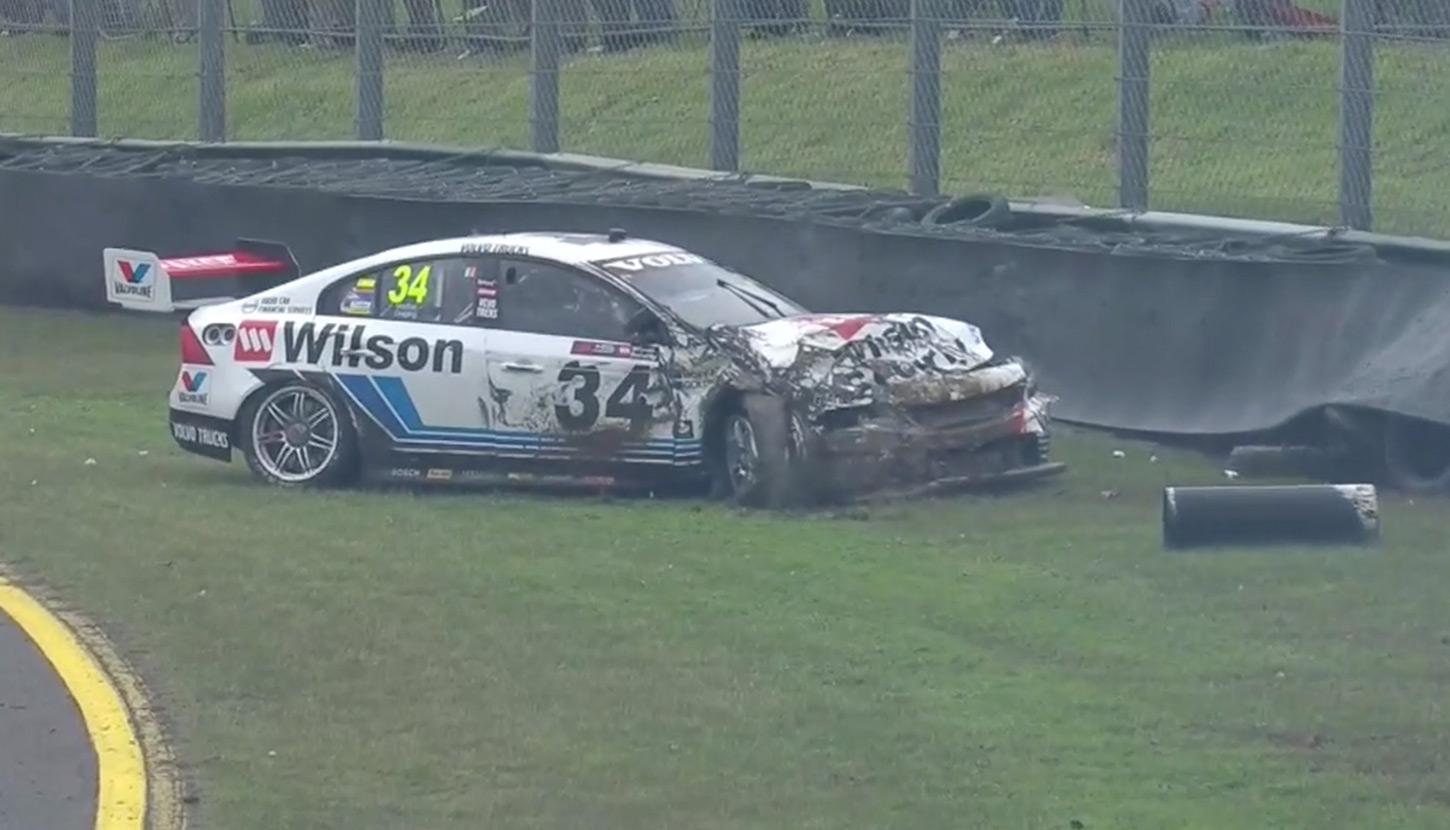
James Golding's Sandown Shunt: A Testament to Modern Supercar Safety
In the high-octane world of VASC Supercars racing, incidents are an inevitable, albeit unfortunate, part of the spectacle. While fans flock to witness breathtaking speed and daring overtakes, the inherent risks mean that a "supercars monster crash" is always a looming possibility. Few incidents encapsulate the drama, the danger, and crucially, the remarkable advancements in motorsport safety, quite like James Golding's terrifying shunt on lap one of the Wilson Security Sandown 500. What could have been a truly catastrophic event instead became a powerful testament to engineering and resilience, as Golding famously walked away from the mangled wreckage.
The Sandown circuit, with its high-speed straights and challenging corners, demands absolute precision. On that fateful lap one, the chaos of a packed starting grid combined with the relentless pursuit of position created the perfect storm. Golding’s car, caught in a multi-car melee, sustained a heavy impact that sent it careening into the barriers. The visuals were stark: carbon fibre shrapnel, twisted metal, and a cloud of debris. It was, by all accounts, a monster shunt that sent a collective gasp through the grandstands and a shudder through the broadcast booth. Yet, amidst the immediate concern, a sense of profound relief washed over everyone as Golding emerged from his machine, seemingly unhurt, a true walkaway story that underscores the incredible strides made in driver protection.
The Anatomy of a "Monster Shunt": Deconstructing Golding's Sandown Incident
When we talk about a "supercars monster crash," it’s not just about the visual destruction; it’s about the sheer forces involved, the speed at which it occurs, and the potential for severe injury. Golding's Sandown incident ticked all these boxes. The initial impact, the subsequent ricochets, and the final, crushing blow against the safety barriers subjected the vehicle, and more importantly, the driver, to immense G-forces.
Modern Supercars are purpose-built racing machines, but beneath their sleek exteriors lies a sophisticated safety cell, meticulously designed to absorb and dissipate energy during an impact. This intricate dance of physics and engineering is what truly made Golding's walkaway possible. Every component, from the crumple zones to the highly rigid chassis, plays a critical role in preserving the driver's space and minimizing the forces transmitted to their body.
Key elements that contributed to Golding's safety include:
- Integrated Roll Cage: A multi-point, high-strength steel roll cage forms the core of the Supercar, creating an impenetrable safety cell around the driver.
- Energy-Absorbing Barriers: The trackside barriers, often made of tyre walls, SAFER barriers, or concrete with high-tech cushioning, are designed to progressively absorb kinetic energy, reducing peak deceleration forces.
- Driver Seating Position & Harness: Golding’s tightly constrained position within the cockpit, secured by a multi-point racing harness, minimized his movement during the impact, preventing him from being violently thrown around.
- HANS Device & Helmet: The Head and Neck Support (HANS) device, coupled with a state-of-the-art helmet, protected his head and neck from whiplash and direct impacts, crucial in high-speed accidents.
This combination of active and passive safety measures represents decades of research, development, and unfortunately, lessons learned from past tragedies in motorsport.
Beyond the Wreckage: The Broader Landscape of Supercar Crashes
While Golding's Sandown 500 incident highlights the remarkable safety of modern racing Supercars, the term "supercars monster crash" can apply to a broader spectrum of unfortunate events. Not all dramatic supercar incidents occur on the racetrack, and not all end with the driver walking away unharmed, or indeed, with the car ever returning to its former glory.
Consider, for instance, the bizarre and disheartening tale of the
SSC Ultimate Aero crushed by a monster truck. This incident, born not from a racing mishap but from owner dissatisfaction and a dramatic, destructive display, represents a different kind of "monster crash." Here, a record-breaking hypercar, a pinnacle of automotive engineering, was deliberately reduced to scrap. While less about driver safety, it speaks to the emotional impact of seeing such magnificent machines destroyed, whether by accident or by design. It underscores the passion and reverence fans hold for these vehicles, and the sadness when they meet an untimely, often spectacular, end. This contrast – an accidental racing crash where safety prevails versus a deliberate, dramatic crushing – offers a fascinating perspective on the diverse fates that can befall high-performance vehicles.
The racing world itself is no stranger to various types of "monster crashes," as discussed in articles like
Monster Crashes Shake Supercar Racing: 2023 Champ & Golding. These incidents, whether involving a 2023 champion or a seasoned competitor like Golding, consistently push the boundaries of safety research and development, turning every crash into a valuable data point for future improvements.
The Human Element and Future of Safety in Supercars
A "supercars monster crash" is more than just bent metal; it's a profound moment for everyone involved. For the driver, walking away unharmed after such an impact is a testament not only to the car's safety but also to their own physical and mental conditioning. The ability to process such an event, bounce back, and get behind the wheel again requires immense resilience. Teams, too, face significant challenges, from the financial burden of repairing or rebuilding a heavily damaged car – often a multi-million dollar undertaking – to the intense pressure of ensuring their driver's well-being and competitive readiness.
The Sandown incident, and others like it, provide invaluable data for engineers. Every crash is meticulously analyzed, using telemetry, onboard cameras, and post-impact inspections to understand precisely how the car behaved and how forces were distributed. This continuous feedback loop drives innovation in:
- Chassis Design: Constantly refining the structural integrity and energy-absorbing capabilities.
- Material Science: Exploring lighter, stronger, and more resilient composites and alloys.
- Cockpit Ergonomics: Enhancing driver containment and interaction with safety systems.
- Track Safety: Ongoing improvements to circuit barriers, run-off areas, and emergency response protocols.
These advancements aren't just for the professional elite. Many safety innovations pioneered in top-tier motorsport eventually trickle down to grassroots racing and even road car technology, making driving safer for everyone. For those aspiring to enter motorsport, or even just participating in track days, Golding's story serves as a powerful reminder of the importance of investing in personal safety equipment and understanding the limits of both the machine and the individual. Always prioritize proper training, quality helmets, HANS devices (where applicable), and appropriate fire-resistant gear.
Conclusion: The Enduring Allure of Speed, Safely Delivered
James Golding's Sandown 500 monster shunt stands as a powerful narrative in the ongoing story of motorsport. It’s a vivid illustration that while the pursuit of speed will always carry inherent risks, the dedication to driver safety has reached extraordinary levels. His ability to walk away from such a devastating incident is not merely luck; it is a direct result of relentless innovation, stringent regulations, and the collective commitment of engineers, teams, and governing bodies to protect those who dare to push the limits.
The sight of a "supercars monster crash" will always be sobering, a stark reminder of the razor-thin margins in top-tier racing. Yet, in Golding's case, it became a moment of celebration – not for the crash itself, but for the life preserved, the spirit unbroken, and the unwavering progress of safety in a sport that continues to captivate millions. As the cars get faster and the competition fiercer, the narrative of safety remains paramount, ensuring that these incredible machines can continue to thrill, while safeguarding the heroes who drive them.